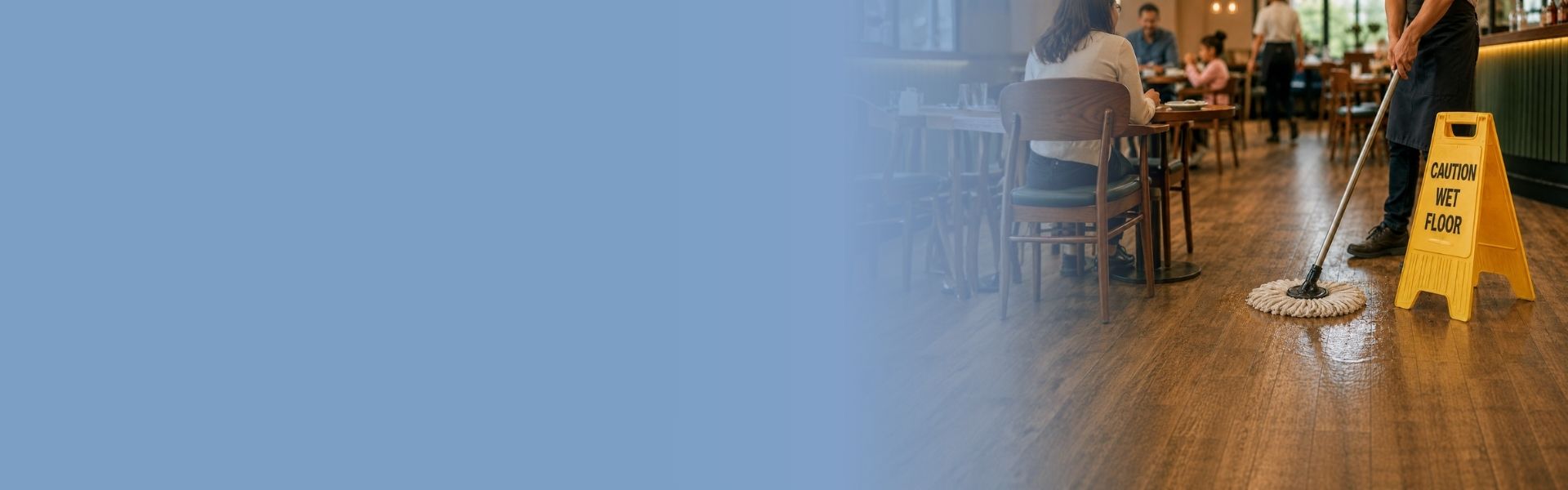
Slip and fall prevention is quiet work. It keeps servers moving, guests comfortable, and your busiest nights running the way you planned them. Slips, trips, and falls are among the most common claims restaurants, bars, and taverns face, and most are preventable with a routine your whole team can follow.
Our claims department built the checklist below from what they see most often, and it is yours to print, post, and use.
Why Slip and Fall Prevention Matters
Falls do not need height to cause serious injury. According to the National Safety Council, nearly 480,000 American workers were hurt badly enough in falls in 2024 to need days away from work, and many of those falls happened on level ground. Add wet floors, kitchen grease, ice wells, and a packed dinner rush, and a restaurant or bar floor carries more risk than most workplaces.
The Checklist Our Claims Team Trusts
Walk your space with this list before every shift. Assign someone to own it, and make accountability part of the routine.
- Clean spills immediately
- Keep floors dry
- Place non-slip mats where floors get wet
- Post wet floor signs whenever floors are damp
- Make sure steps and uneven surfaces are clearly marked
- Keep aisles clear of obstacles
- Remove loose cords and clutter
- Secure rugs and mat edges
- Confirm handrails are secure on every stairway
- Keep every area well lit
- Replace burnt-out bulbs right away
- Keep floor mats at every entrance
- Wipe up tracked-in water and snow promptly
- Keep sidewalks, driveways, and parking areas free of potholes and cracks
- Repair equipment leaks promptly
- Use drip trays under taps and equipment
- Clean grease buildup on a set schedule
- Place anti-slip mats at work stations
One more step worth the investment: slip-resistant shoes for kitchen and bar staff. Research from NIOSH found that providing slip-resistant footwear reduced injury claims from wet and greasy floors among food service workers.
The Right Response
Even careful teams have incidents. If a guest or employee falls, your first priority is their well-being. After addressing any immediate medical needs, inspect and photograph the area (use your mobile phone camera for quick access!) to document conditions at the time of the incident.
Have the employee who inspected the area write down what they found in specific terms. “There was no liquid on the floor” carries more weight than “I didn’t find anything.” Complete the incident report while the details are fresh and list everyone who witnessed the fall.
If your space has cameras, save video for the entire day of the incident before it is overwritten. Then debrief your team on what happened and why.
”Most of the slip-and-fall claims we see trace back to something simple and preventable: a mat that slid out of place, a spill that sat too long, a burnt-out bulb over a step.
Darren ReohVice President | Claims, Badger Mutual
We cannot promise a floor that never gets wet. What we can do is help you build the habits that keep one spilled drink from becoming a serious injury.
A safe floor never gets credit for the night that goes smoothly. Do the quiet work anyway. Print the checklist, post it where your team will see it, and make the walkthrough part of every shift.
Questions about how your policy responds when someone falls? Contact your local Badger agent for more details.